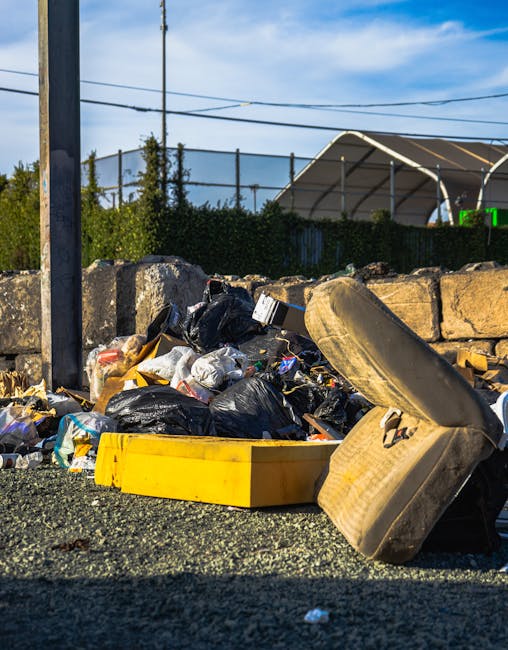
Crystal Palace Park safe rubbish disposal for Anerley homes
If you live in Anerley, rubbish disposal can feel straightforward right up until you have something awkward, bulky, heavy, or potentially risky to get rid of. A broken wardrobe, an old fridge, a bag of mixed junk from the loft, or a garden pile after a weekend clear-out all raise different questions. Crystal Palace Park safe rubbish disposal for Anerley homes is really about doing the job cleanly, legally, and without turning your street, hallway, or driveway into a mess.
That matters more than people sometimes think. One careless lift can damage a wall. One wrong item in the wrong load can create a safety issue. And one rushed disposal choice can leave you with something that should have been handled properly from the start. This guide walks through the practical side of rubbish removal for local homes: what "safe" actually means, how the process works, the most sensible disposal options, and the mistakes to avoid when you want the job done properly the first time.
To keep things useful, we will look at everyday household clearance situations, explain the differences between methods, and show where services like waste removal, furniture disposal, and hazardous waste disposal fit into the picture. Nothing fancy. Just clear guidance you can actually use.
Key takeaway: Safe rubbish disposal is not only about getting items out of the house. It is about choosing the right method, protecting people and property, and making sure recyclable or risky waste is handled sensibly.
Table of Contents
- Why Crystal Palace Park safe rubbish disposal for Anerley homes Matters
- How Crystal Palace Park safe rubbish disposal for Anerley homes Works
- Key Benefits and Practical Advantages
- Who This Is For and When It Makes Sense
- Step-by-Step Guidance
- Expert Tips for Better Results
- Common Mistakes to Avoid
- Tools, Resources and Recommendations
- Law, Compliance, Standards, or Best Practice
- Options, Methods, or Comparison Table
- Case Study or Real-World Example
- Practical Checklist
- Conclusion
- Frequently Asked Questions
Why Crystal Palace Park safe rubbish disposal for Anerley homes Matters
Let's face it: rubbish is easy to ignore until it is in the way. In a home setting, clutter builds quietly. A sofa you no longer use sits under a sheet in the spare room. A smashed appliance waits in the corner of the kitchen. Half-finished DIY waste ends up in black bags by the back door. Then suddenly the space feels smaller, more stressful, and a bit chaotic.
In Anerley, the practical challenge is often not the item itself, but how to move it safely through a house, flat, stairwell, or narrow path without causing damage or risking injury. Bigger items can be awkward in older properties, and even lighter waste becomes a problem if it is mixed, sharp, dusty, or contaminated. A bag full of broken tiles, for example, is not the same as a bag of old packaging. It sounds obvious, but people often treat all rubbish as if it can be moved the same way. It cannot.
Safe disposal also matters because household waste is not always just "rubbish". Some items need separating, some can be recycled, and some require a more controlled approach. A fridge, for instance, is not simply another bulky item; it needs special handling because of components and materials. If you are dealing with mixed waste after a clear-out, a sensible route is often a service that understands sorting, lifting, transport, and responsible disposal as one process rather than a series of rushed steps.
There is also a neighbourhood angle. Rubbish left outside for too long can become an eyesore, attract pests, or create trip hazards. If bags split on a path or in a shared area, the cleanup becomes everyone's problem. Safe disposal keeps your home tidy, but it also keeps communal spaces calmer and easier to manage. That is especially useful in streets where access is tight and neighbours are close by.
How Crystal Palace Park safe rubbish disposal for Anerley homes Works
At its simplest, safe rubbish disposal follows four stages: identify, separate, move, and dispose. The detail in each stage is what separates an organised clearance from a messy one.
1. Identify what you actually have
Start by grouping waste into sensible categories. General household rubbish, furniture, electrical items, garden cuttings, builders' debris, and anything potentially hazardous should not be treated as one pile. If you mix everything together, you make the job slower and more expensive to sort later. You also increase the risk of something unsuitable being handled incorrectly.
2. Separate items by type and risk
A quick sort before collection usually pays off. Put sharp items away from soft waste. Keep electricals separate. Move liquids, paints, batteries, and chemicals into a different category altogether. If you are not sure whether something is hazardous, assume it needs extra caution until you check. That approach is far better than guessing and hoping for the best. Truth be told, hope is not much of a disposal strategy.
3. Choose the right removal method
Some waste can be managed with a small household load, while other jobs need a full clearance team. A few bags of garden waste may be easy enough to book as a quick collection, but a garage full of broken furniture and old appliances is a different story. Services such as garage clearance, loft clearance, and house clearance are often more suitable for larger domestic jobs because they cover heavy lifting, loading, and disposal in one go.
4. Handle transport and disposal responsibly
The safe part is not just the lifting. Transport matters too. Waste should be secured properly so it does not spill, shift, or damage anything in transit. Responsible disposal means recyclable material is kept separate where possible and unsuitable items are sent to the correct facility or treatment route. If an item needs special handling, it should be treated as such. Simple. But not always simple in practice.
If you are not sure whether your waste is mixed, bulky, or specialist, it is usually better to ask before collection rather than after. That small pause can save a bigger headache later on.
Key Benefits and Practical Advantages
Safe rubbish disposal is not just a compliance box. It makes life easier in everyday, real-world ways.
- Less physical risk: Heavy lifting, awkward angles, and sharp edges are where injuries happen. A proper removal approach reduces that risk.
- Cleaner home spaces: Clearing waste out quickly opens up rooms, corridors, lofts, garages, and garden areas so they become usable again.
- Better sorting and recycling: When waste is separated correctly, recyclable items are more likely to be diverted from general disposal.
- Less stress: One organised visit is often easier than several weekend trips to figure out what goes where.
- Better neighbour relations: Neat, prompt removal helps avoid litter, obstruction, and shared-space frustration.
- Suitable for awkward items: Bulky furniture, appliances, and mixed debris can be handled in a more controlled way.
There is also a time benefit people underestimate. A job that looks like "just a few items" can stretch into hours once you start bagging, carrying, and loading. If you have ever stood in a hallway at 8 p.m. wondering why the cupboard is heavier than it looks, you will know exactly what I mean.
For households trying to move, renovate, downsize, or simply reset a cluttered room, a dependable removal plan can be the difference between a smooth weekend and a miserable one.
Who This Is For and When It Makes Sense
This kind of rubbish disposal is useful for a wide range of Anerley homes, especially where space is tight or items are difficult to move safely.
Typical situations include:
- Spring cleaning or a long-overdue declutter
- Moving house and clearing unwanted items before completion
- Renovation or redecoration waste
- Garden tidying after pruning, digging, or clearing
- Clearing a loft, shed, garage, or spare room
- Replacing old furniture, mattresses, or appliances
- Handling mixed waste after tenants move out
It also makes sense if you are in a flat, maisonette, or house with limited storage and limited access. Staircases, narrow landings, shared entrances, and on-street parking can make self-removal awkward fast. The more difficult the access, the more valuable a careful, organised service becomes.
Families often use this kind of service when the rubbish has built up gradually and they want a clean reset without spending several days sorting bags and booking multiple trips. Landlords and letting agents may need it after an end-of-tenancy turnaround. Homeowners, meanwhile, often use it after buying new furniture or appliances and needing the old stuff gone promptly. Different reasons, same basic need: get it out safely.
Step-by-Step Guidance
If you want the process to feel manageable, break it down into practical steps. No drama, no guesswork.
- Walk through the property. Look room by room and list what needs removing. Include lofts, sheds, and outdoor corners people tend to forget.
- Separate waste by category. Keep furniture, electricals, garden waste, builders' debris, and hazardous items apart where possible.
- Check for awkward or restricted items. Large wardrobes, fridges, washing machines, and mattresses need different handling from bagged waste.
- Decide whether you need a single-item pickup or a full clearance. A single broken sofa is one thing; a whole flat after a move-out is another.
- Choose a suitable service type. For mixed domestic waste, a general waste removal option is often the cleanest route. For specific items, dedicated services such as mattress and sofa disposal or fridge and appliance removal may be more efficient.
- Prepare access in advance. Move parked cars if needed, clear hallways, and make sure paths are safe.
- Keep children and pets away during loading. It sounds obvious, but it is one of those things people forget when the van arrives and everyone is suddenly interested.
- Confirm disposal details. Ask how different waste types are handled, especially if you have items that need special treatment.
- Check the area once the load is gone. Look for small fragments, nails, glass, or bag spillages around the pickup point.
That final check is worth doing properly. A tiny shard of glass in a hallway can ruin an otherwise clean job. And it only takes one.
Expert Tips for Better Results
Here are the small things that tend to make the biggest difference.
- Photograph the waste before booking. It helps you remember what is included and makes it easier to explain the job accurately.
- Keep hazardous items separate from the start. Batteries, solvents, paint tins, and similar items should never be tossed in with general waste.
- Flatten or dismantle where safe. A wardrobe in pieces is easier to carry than one awkward lump. Just do not start dismantling something unstable without a plan.
- Use strong bags or containers. Thin bags split at the worst possible moment. Usually on stairs. Usually when you are in a rush.
- Measure access points. Doorways, stair widths, lifts, and tight corners can determine whether something can be moved safely.
- Ask about recycling and sorting. A responsible provider should be able to explain how recyclable material is separated.
A practical little trick: if you are unsure whether something will fit through a doorway, measure it before moving day. It takes two minutes and can save a bruised wall and a bruised mood. Both are best avoided.
Also, do not leave the heaviest work until the end of the day if you can help it. Fatigue makes lifting sloppy. Early morning or the first part of the day tends to be better for larger jobs, especially if you want the space back quickly and without fuss.
Common Mistakes to Avoid
Most rubbish disposal problems come from rushing or guessing. Here are the repeat offenders.
- Mixing everything together. General waste, electricals, and hazardous items should not all go into one load.
- Underestimating weight. A bag of rubble is far heavier than it looks.
- Forgetting about access. What looks easy in the room can be miserable at the stair turn.
- Leaving loose sharp items exposed. Broken glass, nails, and metal edges should be secured before movement.
- Ignoring appliance handling needs. Fridges and freezers often need special treatment, not just brute force.
- Assuming "out of sight" means "sorted". Waste left in the garden, alley, or shared hallway is still your responsibility until it is properly removed.
- Choosing the wrong disposal route for the job size. A small job and a whole-house clearance are not really the same thing, even if they look similar at first glance.
The most common one? People thinking they can deal with a messy clear-out in a single spare hour after work. Sometimes yes. Often, not really.
Tools, Resources and Recommendations
You do not need a van full of tools to dispose of rubbish safely, but a few practical items make the process easier.
- Heavy-duty sacks or bins: Better for mixed bagged waste than thin supermarket bags.
- Gloves: Useful for protecting hands from dirt, splinters, and sharp edges.
- Mask or dust covering: Helpful when dealing with loft dust, insulation, or old stored items.
- Step stool or trolley: Can make awkward handling easier, but only if used properly.
- Labels or marker pen: Good for marking bags or separating categories.
- Measuring tape: Handy for checking furniture and access widths before moving day.
For households looking for a fuller service, it can help to review related options before booking. For example, home clearance suits broader domestic clean-ups, while flat clearance can be a better fit where access and space are tighter. If the job includes old garden materials, garden clearance may be the most practical route.
If you are comparing providers, also look at whether they explain their approach to recycling and sustainability, and whether their insurance and safety approach is clear. Those details matter more than slick wording on a homepage. Usually.
Law, Compliance, Standards, or Best Practice
For rubbish disposal in the UK, the practical rule is simple: waste should be handled responsibly and passed to the right place. Householders are generally expected to take care that their waste does not create a nuisance, hazard, or illegal fly-tipping risk. If you hand waste to someone else, it is wise to use a reputable service that can explain what happens next.
There are a few common-sense best practices that go a long way:
- Keep hazardous materials separate: Paint, oils, batteries, chemicals, and similar items need extra care.
- Do not burn or dump rubbish: That creates obvious safety, environmental, and neighbour problems.
- Use correct handling for appliances: Fridges, freezers, and some electrical items may need specialist removal.
- Ask for clarity on mixed loads: If your waste includes multiple material types, make sure the provider explains how it is sorted.
- Check documentation where relevant: Particularly for larger or more complex jobs, good record-keeping is sensible.
If you are clearing after a renovation, it can also help to understand what can be mixed and what should be separated. The page on what can go in a skip is useful for that sort of decision-making, even if you are not using a skip itself. For building work, the dedicated builders waste clearance page is a helpful reference point.
Best practice is not about being perfect. It is about being careful enough that no one gets hurt, nothing gets dumped badly, and the waste ends up where it should. That is the standard worth aiming for.
Options, Methods, or Comparison Table
Different rubbish disposal methods suit different homes and different volumes of waste. Here is a straightforward comparison.
| Method | Best for | Advantages | Limitations |
|---|---|---|---|
| Self-loading and personal trips | Very small amounts of bagged rubbish | Flexible, low-tech, familiar | Time-consuming, physically demanding, awkward for bulky items |
| Skip-style approach | Planned projects and larger sorted waste | Good for volume, simple once in place | Space required, access and permit considerations may apply |
| Professional waste removal | Mixed household waste, bulky items, awkward access | Fast, convenient, safer for heavy lifting | Usually better suited to booked collections than one-off tiny loads |
| Specialist item disposal | Appliances, sofas, mattresses, or sensitive items | Tailored handling, safer for the item and the property | Not designed for all-in-one mixed rubbish jobs |
For many Anerley homes, professional removal gives the best balance between safety and convenience, especially where items are bulky or access is awkward. A skip can be the right answer too, but it is not always the simplest answer. And simple is often what people really want after a long week.
Case Study or Real-World Example
Picture a typical Saturday in a Anerley terraced house. The spare room has become a storage zone: a broken chest of drawers, a few bags of old clothes, some boxed paperwork, two chairs nobody uses, and a small pile of DIY offcuts from a shelf project. In the garden, there is also an old barbecue and a stack of cuttings from an earlier tidy-up. None of it is dramatic on its own. Together, though, it feels like a lot.
The household starts by sorting the waste into rough groups. Paperwork is separated for confidential shredding. Furniture is stacked near the front room. Garden material is bagged separately. The broken chest of drawers is checked for protruding nails, and the chairs are lifted carefully so they do not scrape the hallway wall. A fridge in the kitchen is left for a separate appliance removal because it is not just another bulky item.
On collection day, access is cleared in advance. Shoes are moved, the front path is swept, and the family keeps the dog indoors so no one is weaving around each other at the door. Small effort, big difference. The load goes in safely, the room is left clear, and by late afternoon the spare room feels like a room again rather than a storage shed with a window. That sort of reset is often the real win.
If the job had been bigger, with more mixed items or a garage full of junk, a broader service such as furniture clearance or house clearance would likely have made more sense. The best method depends on the load, not just the postcode.
Practical Checklist
Use this before any home rubbish disposal visit.
- Sort waste by type: general, bulky, electrical, garden, builders, hazardous
- Remove loose sharp items or secure them properly
- Check whether any item needs specialist handling
- Measure doors, hallways, lifts, and stair turns if items are large
- Clear a path from the waste area to the exit
- Protect floors and walls where needed
- Keep children and pets away during moving and loading
- Set aside confidential papers for shredding
- Confirm which items are going and which are staying
- Do a final sweep for splinters, nails, glass, and loose debris
Quick rule: if an item feels awkward, heavy, dusty, or potentially hazardous, treat it as a special-case item rather than trying to wing it. That one habit prevents a lot of bother.
Conclusion
Crystal Palace Park safe rubbish disposal for Anerley homes is really about making a simple household task safer, cleaner, and less stressful. When waste is sorted properly, access is prepared, and the right disposal route is chosen, the whole job becomes more manageable. You save time, avoid unnecessary lifting, and reduce the chance of damage or last-minute problems.
The main thing is not to overcomplicate it. Start with what you have, separate the risky bits, and choose a method that suits the size and type of waste. For some homes, that means one small collection. For others, it means a fuller clearance approach with help for bulky or mixed items. Either way, the aim is the same: clear the space safely and leave things better than you found them.
Get a free quote today and see how much you can save.
If you are weighing up options for a bigger clear-out, the pages on pricing and quotes and book online can help you plan the next step without guesswork.
And once the clutter is gone, the house feels lighter. Funny how that works, really.
Frequently Asked Questions
What does safe rubbish disposal actually mean for a home in Anerley?
It means sorting, moving, and removing waste in a way that protects people, property, and the environment. Safe disposal also means separating items that need special handling, such as appliances or hazardous materials.
Can I put all my household junk out together?
Not ideally. Mixed rubbish can include items that should be treated differently, such as electricals, sharp debris, or paint tins. Separating waste first usually makes the job safer and more efficient.
Is it better to use a skip or a rubbish removal service?
It depends on the job. A skip can suit planned projects and larger volumes of waste, while rubbish removal is often better for bulky items, mixed loads, and homes with difficult access. The right answer is the one that fits the actual waste, not just the habit.
What happens if I have a fridge, freezer, or washing machine to get rid of?
Those items are usually best handled through dedicated appliance removal. They are heavy, awkward, and may require specific disposal steps, so they should not be treated like ordinary bagged rubbish.
Do I need to separate recyclable items before collection?
If you can, yes. Separating recyclables helps the disposal process run more smoothly and can support better recycling outcomes. It also makes sorting much easier on the day.
How do I know if something counts as hazardous waste?
If it involves chemicals, solvents, batteries, oils, or similar materials, treat it cautiously. When in doubt, keep it apart from general waste and ask for guidance before booking collection.
What is the safest way to clear rubbish from a flat or upper-floor home?
Plan the route first, protect shared areas, and avoid carrying items that are too heavy or unstable for one person. For tighter spaces, flat clearance is often the more sensible option than trying to manage everything yourself.
Can rubbish disposal help with a full house move or downsizing?
Absolutely. In fact, that is one of the most common reasons people book it. It clears out unwanted furniture, old boxes, and leftover clutter so the move feels more organised.
How far in advance should I prepare for a collection?
As soon as you know the waste type and volume, start sorting it. Even a little preparation makes collection easier, especially if you need to clear access routes or separate different item types.
What should I do with old sofas or mattresses?
Those are usually best handled through specific disposal services rather than general waste. They are bulky, awkward to carry, and easier to manage when treated as their own category.
Is it safe to leave rubbish outside before collection day?
Only if it is secure, dry, and not creating a trip hazard or obstruction. Bags left out too early can split, get moved by wind, or become a nuisance. Keep it tidy and brief.
Can I dispose of builders' waste from a DIY project with household rubbish?
Sometimes mixed waste is possible, but builders' debris often needs separate handling because of its weight and composition. Bricks, tiles, plasterboard, and offcuts should be considered carefully before mixing them with general household waste.
What if I am not sure how much rubbish I actually have?
Take a rough walk-through and group items by room. A quick visual count is often enough to estimate whether you need a small removal, a larger clearance, or a more specialised approach. A few photos help too. Very helpful, actually.
Where do confidentiality concerns fit in?
If you are clearing paperwork, old files, or stored documents, confidential shredding is a sensible extra step. It keeps private information from sitting in open bags or mixed waste.
What is the best next step if I want the job done quickly?
Sort the waste, identify anything specialist, and use the relevant service pages to compare the right type of clearance. If the load is mixed or bulky, a full waste removal or house clearance approach is often the easiest route.