Commercial Waste in Anerley

Commercial waste in Anerley needs a service that keeps day-to-day operations moving while making disposal straightforward, lawful and tidy. We handle routine business rubbish collection, site clearances and recurring waste streams for organisations that want a practical way to manage mixed materials. The aim is simple: remove what your premises no longer need, keep the process orderly, and leave your team with more usable space and fewer disposal worries.
Our work covers common business waste from offices, shops, workshops, shared buildings and other commercial premises. That can include bagged rubbish, recyclable materials, redundant fixtures and fittings, and bulky items that need careful loading. If your business produces waste in regular bursts rather than in a one-off pile, we can shape the collection around that pattern and keep the job focused on the right materials.
For a clearer view of how the service is arranged, you can review pricing and quote information or use the contact page when you are ready to request a quotation.
Commercial waste collections for working premises
Business waste removal is most useful when it avoids disruption. We collect materials that have built up in back rooms, storage areas, plant spaces and shared access points, then remove them with as little interference to staff and visitors as possible. A sensible collection plan matters when premises stay open during the day, when access is limited, or when waste has to be moved through occupied areas in stages.
Typical commercial waste loads include broken office furniture, cardboard, packaging, shelving, redundant shop fittings, light demolition debris and everyday non-hazardous rubbish from trading premises. Some loads are a simple clear-out after reorganisation; others are part of a broader change such as moving stockrooms, replacing furniture or emptying a unit between occupiers. The service is built to handle these practical variations without turning the job into a major interruption.
What can be collected

Many businesses need a mix of removal options rather than a single fixed type of collection. The main task is to separate what can be handled as ordinary commercial waste from anything that needs a specialist route. Common recyclable or reusable items may be handled alongside mixed rubbish where that is appropriate, while items with a different disposal route are considered separately. That keeps the process safer and reduces unnecessary handling.
When planning a collection, it helps to know whether you have loose bagged waste, bulky items, dismantled fixtures or materials that are still assembled. Different forms of waste affect loading time, access needs and the number of people required. If the pile includes a range of materials, we can talk through the likely make-up and agree the most practical way to remove it in one visit or across more than one collection.
For business owners comparing options, the useful point is not just what is being taken away but how the load will be managed on the day. If you need to move stock, clear a workspace or empty a storage area, the collection should suit the site rather than forcing the site to adapt around the waste. That is often the difference between a quick removal and an awkward one.
Office waste and workplace clearances
Office waste removal often involves more than bagged rubbish. Desks, task chairs, filing units, broken cabinets, monitors, small appliances and mixed paper waste can all appear in the same clearance, especially when a workplace is being refreshed or reorganised. We can remove these items as part of a broader office clearance so the area can be returned to productive use without clutter sitting in corners or corridors.
When an office is being updated, the main challenge is usually sequencing. Old furniture may need to be moved before replacement items arrive, or archived materials may need to be separated from general rubbish. A well-planned clearance makes it easier to keep the right items in the right place, and it helps businesses avoid accidental disposal of anything that still needs to be retained.
Supporting a tidy handover
If a unit is being vacated, if teams are changing floors or if storage areas are being rationalised, it is usually best to define the waste categories in advance. One office may need only a few bulky items removed; another may need a full clear-out of furniture and mixed office rubbish. The service can be kept focused on the items listed for removal, while any separate records, equipment or reusable stock remain where they should be.
Furniture, fixtures and bulky item disposal
Bulky commercial items are often the hardest part of waste management because they take up space long before they are ready to be disposed of. Furniture disposal covers items such as desks, chairs, tables, cabinets, reception units and shelving, along with other large pieces that no longer serve the business. These items may be removed individually or as part of a wider clearance, depending on what your site needs.
Where furniture is still in usable condition, some businesses choose to separate it from ordinary waste so they can decide the right onward route. Others just need it out of the way quickly so that the room can be repurposed. Either way, the service is designed to handle bulky loads safely, without forcing staff to lift or shift items that are awkward, heavy or difficult to move through shared access points.
In many cases, the best approach is to group items by type before collection. That makes it easier to understand what needs dismantling, what can be carried as-is and what might be better treated as a separate disposal stream. Clear identification of the load can save time on the day and keep the collection efficient.
Kitchen, appliance and specialist items

Some commercial waste loads include appliances or equipment that cannot simply be tipped into an ordinary mixed waste pile. Fridge and appliance removal is a good example: these items can be bulky, weighty and awkward, and they often need more careful handling than standard rubbish. Businesses may need them removed during a kitchen refit, equipment changeover or end-of-tenancy clear-out.
Appliances and similar items are best handled with a clear description of what they are, where they are located and whether they are already disconnected or ready to move. That is especially important in premises where the route out of the building is narrow, shared or sensitive to disruption. If the item is part of a larger clearance, it can usually be folded into the same collection plan as other bulky waste.
Not every item should be treated the same way as general rubbish, so it is worth separating specialist materials from ordinary business waste at the planning stage. If you need to clear a mix of appliances, redundant fixtures and everyday rubbish, the collection can be organised around that mix rather than forcing you to sort everything into a single category first. A careful approach makes the process more predictable and easier to manage.
Garage, storage and back-of-house clearances
Commercial premises often accumulate waste in places that are not visible to customers but still affect how a business operates. Garage clearance, store-room clearance and back-of-house removal all help to reclaim working space where stock, packaging, old equipment and unused fittings have been left for too long. These areas tend to fill gradually, so the volume can be surprising when they are finally emptied.
These clearances usually involve mixed loads rather than one neat category of waste. You may have boxes, broken equipment, redundant tools, old display materials and general rubbish gathered together in the same area. The value of a structured clearance is that it removes the load in one managed process and leaves the space ready for storage, access or repurposing.
Where items are tightly packed or stacked, access and lifting may matter as much as volume. That is why it helps to think about the clearance as a practical site task rather than just a disposal job. The aim is to get the waste out safely, keep the area orderly and avoid unnecessary rehandling of items that are already in awkward positions.
Waste handling, sorting and recycling choices
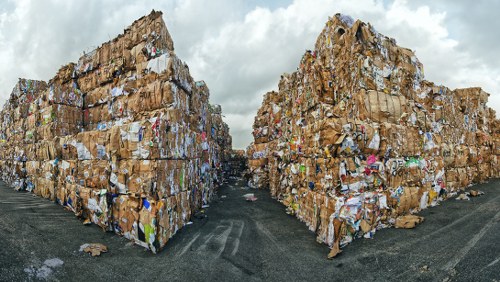
Commercial waste removal works best when the disposal route matches the material. Some items may be suitable for recycling, others for specialist treatment and others for standard disposal. The service therefore focuses on handling the load in a way that respects the material type rather than bundling every item together without thought. That approach is especially useful when businesses want their clear-out to remain practical and responsible.
Recycling and sustainability information can help if you want to understand how mixed commercial waste is separated and why certain materials are treated differently. The key point for customers is that not every item has the same disposal route, and a little upfront clarity makes the collection easier to plan. If you already know which materials are involved, the quotation can reflect the work more accurately.
A sensible waste plan often starts with broad categories: mixed rubbish, recyclables, bulky furniture, fixtures, and anything that needs special handling. Once those groups are clear, the collection can be organised in a more efficient way. Businesses that prepare this information in advance often find the practical side of the job much simpler because the right collection method is easier to match to the right load.
Quotations, access and job details
When you request a quotation, the most useful details are the type of waste, the approximate amount, and where the items are located. A picture can help, but it is not the only way to describe a load. If the waste is inside a building, useful information includes floor level, lift access, parking restrictions and whether anything needs dismantling before it can be removed. Those points affect the work more than people sometimes expect.
It also helps to mention whether the waste is ready at one point or spread across several rooms. A collection from a single storage area is different from a clearance that involves an office, a basement and a rear yard. We use the information you provide to shape the quotation around the actual task, so the final plan is based on the work needed rather than a rough guess.
Book online if you already have a clear picture of the job, or use the enquiry route that suits you best when you want to discuss a more complex clearance. For many businesses, a brief description is enough to begin, and the next step is simply to agree the collection details and timing.
About Anerley
Anerley is a district in the London Borough of Bromley in south-east London, with a history shaped by suburban growth, transport links and the changing edge between inner and outer London. The area developed strongly during the nineteenth century as rail travel made it easier for people to live farther from the centre while still reaching it relatively quickly. Its name is associated with the old roadside settlement that grew around the Crystal Palace area after the Great Exhibition era, and the district later became closely identified with the railway corridor that still runs through it. Today Anerley sits between better-known neighbours such as Crystal Palace, Penge, Elmers End and South Norwood, giving it a position that connects several layers of south London history and movement.
Business waste removal shaped around your premises
Commercial waste in Anerley can involve a single bulky item, a regular build-up of bagged rubbish or a fuller clear-out of office, storage or trading space. The service is most effective when it is tied to the actual arrangement of the premises, so the work can be carried out with the right route, the right pace and the right disposal approach. That keeps the process practical for businesses that want room to work without wasting time on clutter.
If you are planning a broader clearance, it often helps to think about the items in groups rather than as one mixed pile. Furniture, appliances, general rubbish and specialist materials may all need different handling, and the right preparation makes that easier to manage. You can keep the process simple by sending a clear description, then choosing the quotation route that suits your schedule and the size of the job.
For a straightforward next step, request a quotation here and tell us what needs removing.